template<template< typename U, typename V, typename...Args > class ObjectType = std::map, template< typename U, typename...Args > class ArrayType = std::vector, class StringType = std::string, class BooleanType = bool, class NumberIntegerType = int64_t, class NumberUnsignedType = uint64_t, class NumberFloatType = double, template< typename U > class AllocatorType = std::allocator>
| const_iterator nlohmann::basic_json< ObjectType, ArrayType, StringType, BooleanType, NumberIntegerType, NumberUnsignedType, NumberFloatType, AllocatorType >::cend |
( |
| ) |
const |
|
inline |
Returns a const iterator to one past the last element.
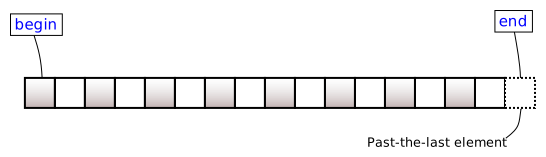
Illustration from cppreference.com
- Returns
- const iterator one past the last element
- Complexity
- Constant.
- Requirements
- This function satisfies the Container requirements:
- The complexity is constant.
- Has the semantics of
const_cast<const basic_json&>(*this).end().
- Example
- The following code shows an example for cend.
8 json array = {1, 2, 3, 4, 5};
11 json::const_iterator it = array.cend();
17 std::cout << *it <<
'\n';
basic_json<> json
default JSON class
5
The example code above can be translated withg++ -std=c++11 -Isrc doc/examples/cend.cpp -o cend
- Since
- version 1.0.0
Definition at line 4090 of file json.hpp.
 1.8.11

